Top 3 Greeting Card Portfolio Tips
Published on 11/06/2026


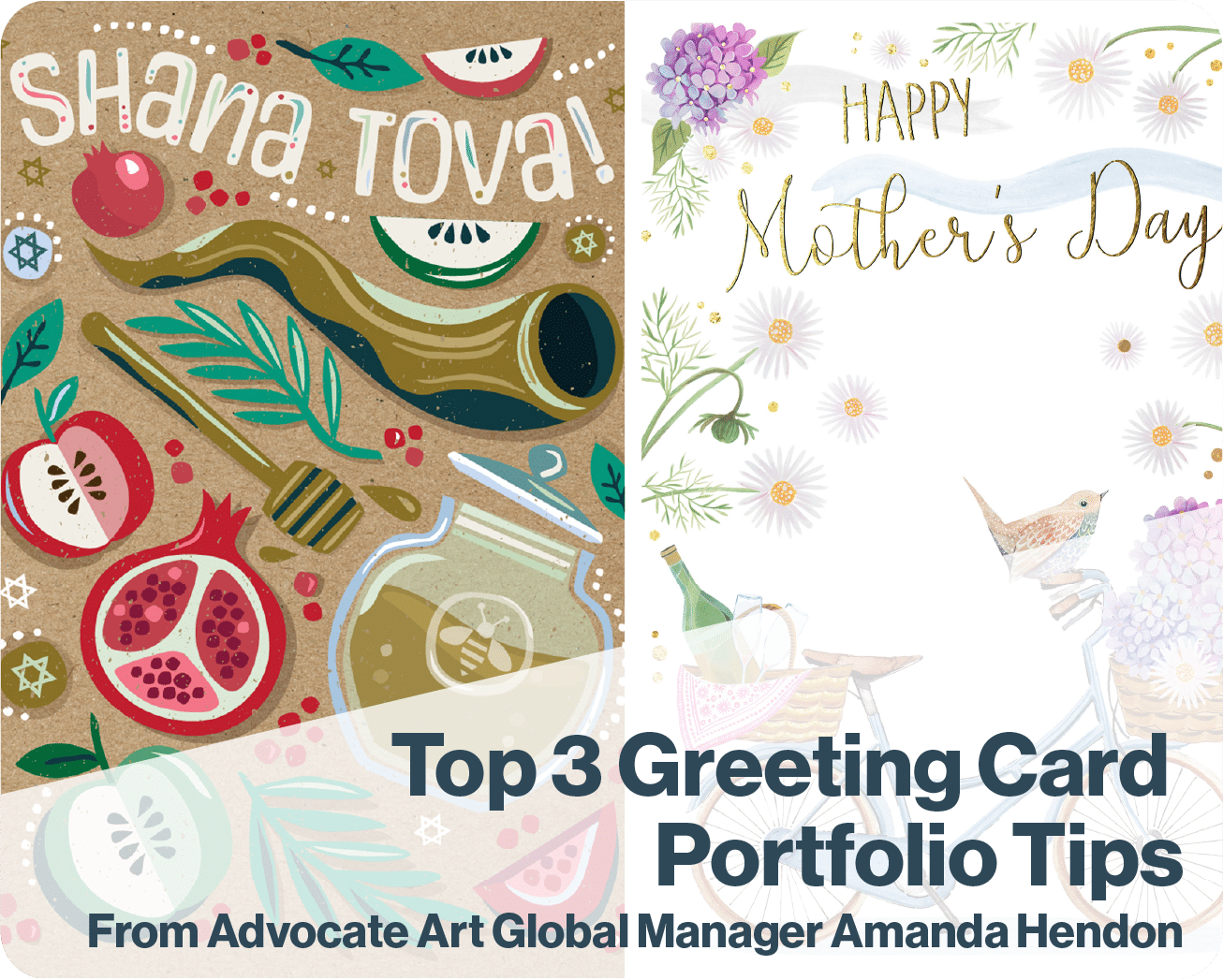
Greeting Card designs by Advocate Art illustrators Amanda Shufflebotham, Kathryn Selbert, and Victoria Nelson.
Top 3 Greeting Card Portfolio Tips
Teacher: Amanda Hendon, Advocate Art Global Manager
Today, we are sharing Advocate Art’s Top 3 Tips for Greeting Card Illustration. These tips come directly from Advocate’s Global Manager Amanda Hendon. Amanda has been working in the greeting card industry for over six years with clients such as American Greetings and Hallmark. These tips come from her years of experience working with clients and helping artists develop their greeting card portfolios.
1. Play to your strengths
It seems like an obvious thing to say, but knowing your own strengths as an artist and greeting card designer is integral, and similarly, making the most of those strengths. If you’ve had clients love your beautiful watercolor flowers for Mother’s Day cards, it certainly doesn’t hurt to make more of them! Of course, you don’t want to pigeon hole yourself, but if you’ve had a design sell well and have many clients ask after it, it behooves you to make more similar designs. To summarize: explore and create new designs, but know that you don’t always need to reinvent the wheel – if you’re a watercolor artist, you don’t also need to become a master of vector art.
2. Explore less popular occasions
Whilst a well designed birthday design will usually sell, it’s also important to keep in mind there are many underserved occasions in the greetings world, and because of that, clients have a very hard time finding relevant designs. These occasions would include: Chinese New Year, Diwali, St. Patrick’s Day, Hanukkah and Rosh Hashanah, Baptism, Communion, and Confirmation, and in general any design for a masculine buyer. Because there’s a general lack of designs for these occasions, making a few designs or a range for them means you have a higher chance for a sale – there’s simply less competition.
3. Keep on top of current trends
The greeting card market has it’s tried and true’s (you can always rely on bunnies for Easter, for example), but it’s important to be aware of what’s trending in the greetings world and pop culture at large. Greeting cards pull their trends from the worlds of fashion, home decor, and even viral trends; so if you see on TikTok and Instagram an explosion of frog memes, it wouldn’t be a bad idea to work a frog into a card or two! Whilst designs should always primarily reflect icons and motifs for their occasion (Birthday cards and cake, for example), you can work in trendy aspects through message carriers, palettes, and additional trendy icons.
For more free tips for how to improve your illustration portfolio, subscribe to our ITSme Learning Newsletter!
Other Resources
How to Spot AI Art.
AI-generated imagery is getting harder to spot, but it still leaves clues. For illustrators, art directors, and audiences alike, learning to recognise the signs matters more than ever. AI can imitate a style convincingly, but it struggles to reason about how objects, anatomy, and details actually work — and that’s where it gives itself away….
How to create a perfect freelance Illustrator biography! copy page 1
Learn how to write a powerful professional illustrator biography that attracts the right clients. Discover structure tips, examples, and how to create a compelling artist bio in 150–250 words.
What Happens in an ITSme Mentorship? A Week-by-Week Breakdown
Imagine having a guide who not only understands the creative path an individual wants to walk, but also has the knowledge and tools to help them get there – successfully. That’s the core of the ITSme Learning Mentorship. Whether someone is a student, a young professional at the beginning of their career, or an artist…
Can You Spot the AI Art?
AI-generated imagery is becoming harder to spot, but for artists, art directors, and audiences alike, learning to recognise the signs matters more than ever. From strange anatomy and inconsistent lighting to nonsensical details and overly polished textures, AI art often reveals itself the longer you look. It can imitate style, but it struggles to capture…