How to Make Marketable Christmas Card Designs: Traditional vs. Contemporary
Published on 21/12/2023


How to Make Marketable Christmas Card Designs: Traditional vs. Contemporary
Teacher: Joanne Cave, Advocate Art Artist Agent
It’s estimated that almost 100 million Christmas single cards are sold in the UK over the festive season, and that a further 900 million are sold in packs or boxes. That’s one BILLION cards, and a lot of sales potential for licensing artists working across all styles and techniques, from the overtly traditional and nostalgic to the more classic and contemporary cards.
So where do I start?
The wonderful thing about designing for Christmas cards is that although the imagery may, to a certain extent, be limited, the possibilities within those themes are endless! Santa is definitely not just for children when it comes to Christmas cards. He’s the epitome of the festive season, and can be as modern or traditional as you like. He can be painted in the traditional, nostalgic sense, such as this design from Simon Treadwell, or be seen surfing into the Season like this design from our newly-signed artist Lauren Radley. He can be anything from heartfelt to hilarious, and everything in between. There’s a Santa design for everyone, whether you’re 8 or 80! The same goes for snowmen, penguins and reindeer!


Greeting Cards by Advocate Art illustrators Simon Treadwell (left) and Lauren Radley (right).
Imagery and icons
Christmas is steeped in tradition and people appreciate traditional icons to remind them of times gone by. However, that’s not to say that you can’t put a contemporary spin on classic festive icons. Baubles, trees, wreaths, and doorways can all be adapted to appeal to a wide variety of tastes and sends.
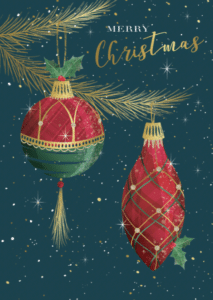
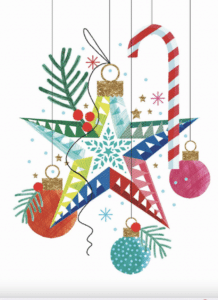
Greeting Cards by Advocate Art illustrators Di Brookes (left) and Jenny Wren (right).
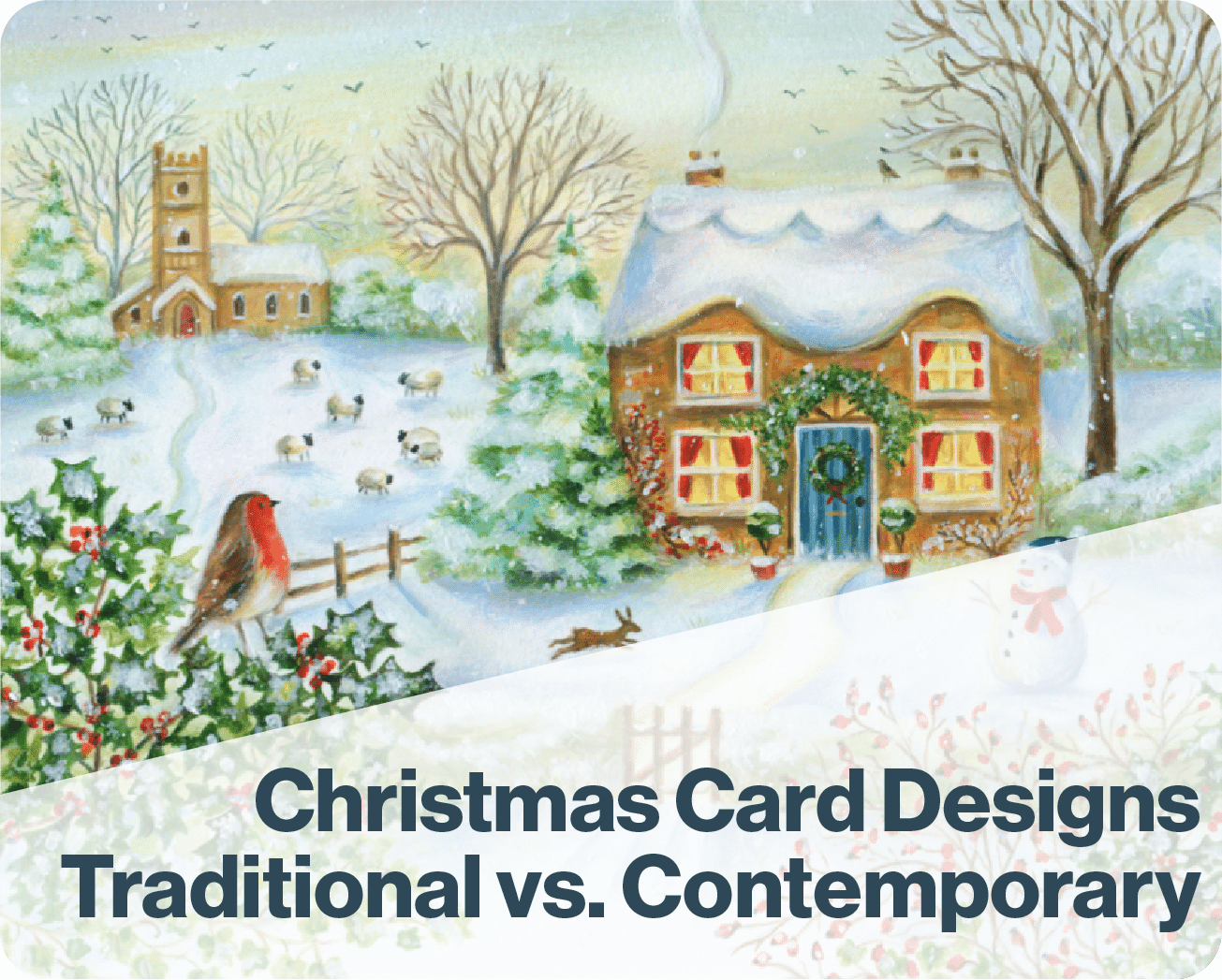
Sending a Christmas card is also the perfect way to connect with friends & family you may not be in contact with for the rest of the year. It could be said that in the hard times we now face, post Covid (when Christmas was essentially cancelled), consumers now feel more nostalgic than in previous years. Traditional images of cosy houses tucked away in snowy landscapes capture this perfectly, as this design by Ileana Oakley shows. Scenes of ‘togetherness’; of market towns, fairgrounds and people shopping on busy high streets all remind us of what we may have previously taken for granted, but these too can be given a contemporary twist by experimenting with technique, perspective, colour, and scale.
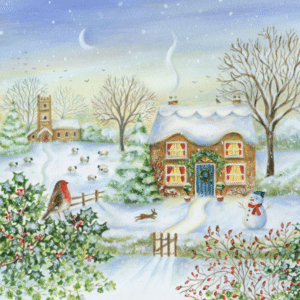
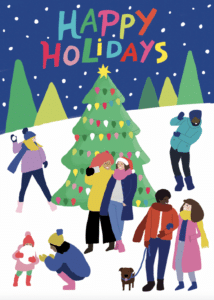
Greeting Cards by Advocate Art illustrators Ileana Oakley (left) and Charlotte Pepper (right).
People often wrongly assume that Christmas cards are for the older generation, but recent evidence suggests younger people may be buying more cards than ever. It’s a tangible way to connect in an era when communicating digitally has become the norm, so contemporary themes and a nod to popular culture may be themes to consider.
Colour, size, and finishes
Traditional designs may use more rich, seasonal colours, including rich reds, greens and, more recently, navy and gold palettes, but in recent years there has also been the inclusion of brighter, contemporary palettes.
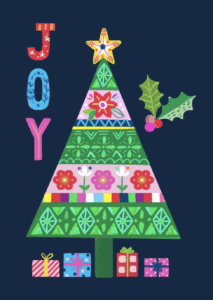
Greeting Cards by Advocate Art illustrators Jaime Cromer.
Designs that we would generally describe as Traditional may be more hand-rendered/painted with a nostalgic feel. They may sometimes have more wording or ‘verse’ than more modern cards, or be slightly larger card sizes, with additional special finishes or add-ons such as foil or pads. However, with the increased focus on sustainability in recent years, traditional, opulent finishes such as foils and glitter are being replaced with embossing and die-cutting, neither of which reduce the recyclable potential. Die-cut designs are a great way to make greeting cards stand out in displays, so they are a great option to consider.
Whatever the style or theme, it’s important not to underestimate the joy that can be brought from sending and receiving Christmas cards, and it’s a tradition we (at Advocate Art) very much keep alive by offering a wide variety of fantastic designs to cater to all tastes and needs!
For more free tips for how to improve your creative design skills subscribe to our ITSme Learning Newsletter!
Other News
Secrets from the Talent Scouts
Featured illustration by Maria Teresa Palladino. Submitting your work to an illustration agency can feel daunting, especially when you are unsure what happens once you press send. After reviewing a large number of applications, we have gathered a few simple tips to help your submission feel thoughtful, personal and memorable Make it Personal We love…
What Do Agents Look For? Insights From Three Recent Signings
Finding the right agency for you goes far beyond simply being signed. It’s about finding a place where your work can grow, where you can collaborate with great clients on projects that truly resonate with you, and where you can build a sustainable income out of what you love. At ITSme, we help illustrators find…
How to Build an Illustration Portfolio Without Client Work
“I don’t have any client work, what do I even put in my portfolio?” This is one of the more common worries we hear from illustrators who are new to developing their portfolios, but we want to encourage you to reframe this question: Having no client work isn’t a weakness, try to view this as…
Are There Snakes in Your Folio? How to Spot Them Before an Art Buyer Does
What to include in an illustrator portfolio and how to spot snakes! (In the children’s publishing and decorative market) Art directors scan agency portfolios and websites rapidly. They are mentally processing the acquisitions list they’re looking to fulfil, remembering what the rights team said sells well in a particular market, and giving serious artistic consideration…
How to Get Your Illustration Work Seen
Are you an illustrator looking for open calls and opportunities? The work is out there, and you are not invisible, although sometimes in such a competitive environment, we understand it is natural to worry that you are going unseen. The fact is, you just need to know where to look and how to show up…
Why Graphic Novels Are Booming – and Why Now Is the Time to Get Them Into Your Portfolio
Graphic novels are having a moment and it’s no passing trend. From classrooms to bestseller lists, graphic novels are dominating shelves and reading time across all ages. What was once seen as a niche format with a distinct, heavy-lined “comic book” aesthetic has exploded into a dynamic, expressive medium that spans every style and genre…