
How to create a perfect freelance Illustrator biography!
Published on 16/03/2026


Professional Illustrator Biography: How to Create the Perfect Freelance Artist Bio
An illustrator biography is not something that sits quietly in a folder somewhere. It is front and centre — shaping how clients, art buyers and collaborators perceive you before they even explore your portfolio. Your professional illustrator bio appears on the first page of your portfolio, the About section of your website, your LinkedIn profile, and the short snippets across social media. In many cases, clients choose the artist first — and the art style second.
So how do you write a freelance illustrator biography that truly attracts the right clients? The key is learning how to communicate not just what you do, but who you are as a creative professional.
Why Your Illustrator Bio Matters
Art stems from human experience. Clients are looking for illustrators who demonstrate empathy with the subject matter and a genuine connection to the story being told. Increasingly, projects are placed with artists who bring “own voice” perspectives — creatives whose personal background, interests, values or lived experiences enhance the authenticity of the work.
A strong illustrator biography allows you to hook potential clients by sharing your personality, influences, artistic process and creative motivations. It helps them understand why you are the right fit — not just visually, but emotionally and culturally.
The Ideal Structure for a Professional Illustrator Biography
A powerful artist bio typically follows a simple three-part structure designed to capture attention quickly while offering deeper insight for those who want to learn more.
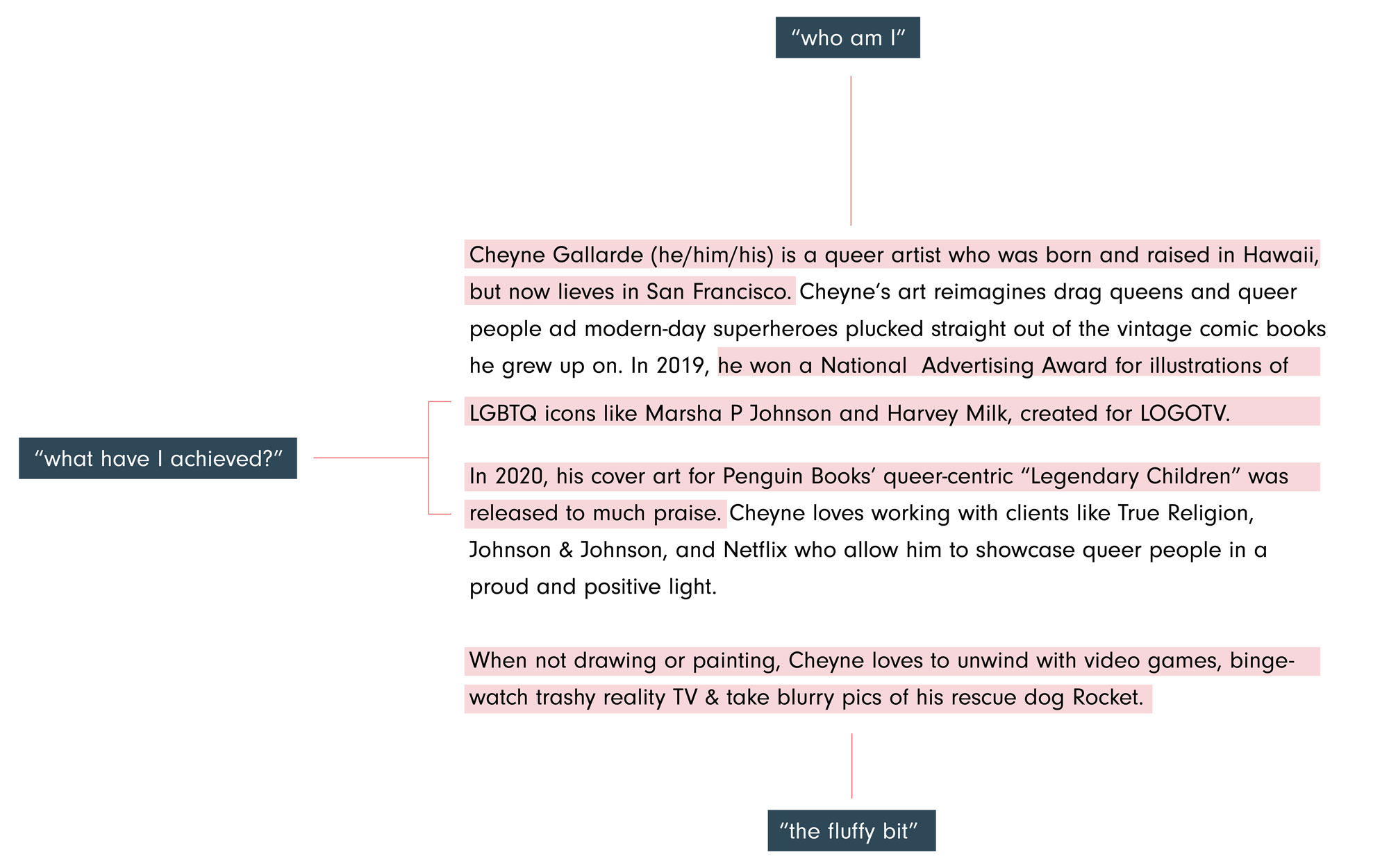
The first section is your elevator pitch. This opening paragraph should be around 50–70 words and include the most essential details — such as where you are based, your artistic focus and what makes your work distinctive. This section often becomes the short snippet used across platforms.
The second section is your professional flex. Here you can highlight education, exhibitions, awards, collaborations, campaigns or notable achievements. This is your opportunity to show credibility and demonstrate experience within the creative industry.
The third section adds personality and human connection. Sharing interests, inspirations, influences or unexpected personal details can help clients connect with you and imagine how you might engage with their projects.
Ideally, a freelance illustrator biography should be concise — typically between 150 and 250 words. Writing in the first person using natural language helps create authenticity and relatability.
What to Include in Your Illustrator About Page
When writing your bio, think about the details that define your creative identity. Where did you grow up, and where are you based now? How would you describe your illustration style and techniques? Is there anything unusual or distinctive about the way you work?
You may also want to mention the causes you care about, the experiences that shape your storytelling, or the influences that first inspired you to become an artist. Clients often connect most strongly with illustrators who bring genuine perspective, personality and depth to their work.
Think about what truly sets you apart. This could be your technical skill, your approach to character design, your subject knowledge, your humour, your experience in another field, or any extra value you bring to a project.
Generate Your Professional Bio
How to Describe Your Creative Process
Art buyers are often interested in how illustrators actually work. Describing your process — from character studies and sketch development to layering, rough pencils or hand-drawn elements — adds credibility and helps bring your work to life.
This is especially important now, as generative AI tools become more prominent. The hand-drawn, human creative element matters. Clients are not just commissioning an image; they are commissioning a person, a perspective and a creative voice.
Tips for Writing an Authentic Artist Biography
Try to keep your tone light, engaging and even witty where appropriate. If you have a huge amount of experience, say so confidently. If you are newer to the industry, focus on what makes your viewpoint fresh, relevant and valuable. Play to your strengths and avoid phrasing that sounds apologetic or negative.
It is also worth being concise. Your bio should work hard for you, so avoid wasting valuable word count on obvious points. Instead, use that space to communicate your personality, your passions and why a client would enjoy working with you.
Be Proud of Your Humanity as an Illustrator
It has never been more important to celebrate what makes illustrators authentic and original creators. Your humanity matters. Your background, your voice, your interests and your lived experience can all help clients feel that you are the right fit for a story or project.
A great illustrator biography is more than an introduction — it is a positioning tool. It helps you attract the right opportunities, communicate your value clearly and make a memorable impression.
If writing about yourself feels difficult, you do not have to do it alone. The ITSme BIO Generator is designed to help illustrators turn their experience, style and personality into a professional bio that feels natural, human and client-ready.
Other News
How to create a perfect freelance Illustrator biography!
Learn how to write a powerful professional illustrator biography that attracts the right clients. Discover structure tips, examples, and how to create a compelling artist bio in 150–250 words.
What Happens in an ITSme Mentorship? A Week-by-Week Breakdown
Imagine having a guide who not only understands the creative path an individual wants to walk, but also has the knowledge and tools to help them get there – successfully. That’s the core of the ITSme Learning Mentorship. Whether someone is a student, a young professional at the beginning of their career, or an artist…
Announcing Our Very First Picture Book Course!
We are extremely excited to announce our first picture book class and mentorship program, in a collaboration between Caroline Wakeman Literary Agency and multi-talented author-illustrator Sally Anne Garland. Your Picture Book Journey: How to Write and Illustrate Your Own Picture Book is a 12-week course for writers, illustrators, and visual storytellers ready to bring their…
Why Every Illustrator Portfolio Needs a Stand-Out Character (Yes, Even Yours)
When you’re thinking about our favourite stories as a child, we often think about the narrative, the themes, perhaps a particular quote that stood out, but the most memorable elements are always the characters. The reason the characters always stay in our minds is because they are the gateway to the narrative, and all of…
Trend Watch: YA Illustrated Covers
Over the past few years, illustrated covers have become a defining visual language in the Young Adult (YA) and New Adult (NA) book market. And no, this isn’t just a passing trend—it’s a design evolution powered by the viral force of #BookTok, #bookgirlies, and a growing appetite for genre-fluid storytelling. Hear what’s driving the…
Trend Watch: The Graphic Novel Boom
Every week we’ll be featuring a new article over on LinkedIn, in our new trend watch series! Graphic novels are having a moment—and it’s no passing trend. From classrooms to bestseller lists, graphic novels are dominating shelves and reading time across all ages. What was once seen as a niche format with a distinct, heavy-lined “comic book”…