What to Have In Your Graphic Novel Illustration Portfolio
Published on 15/06/2023


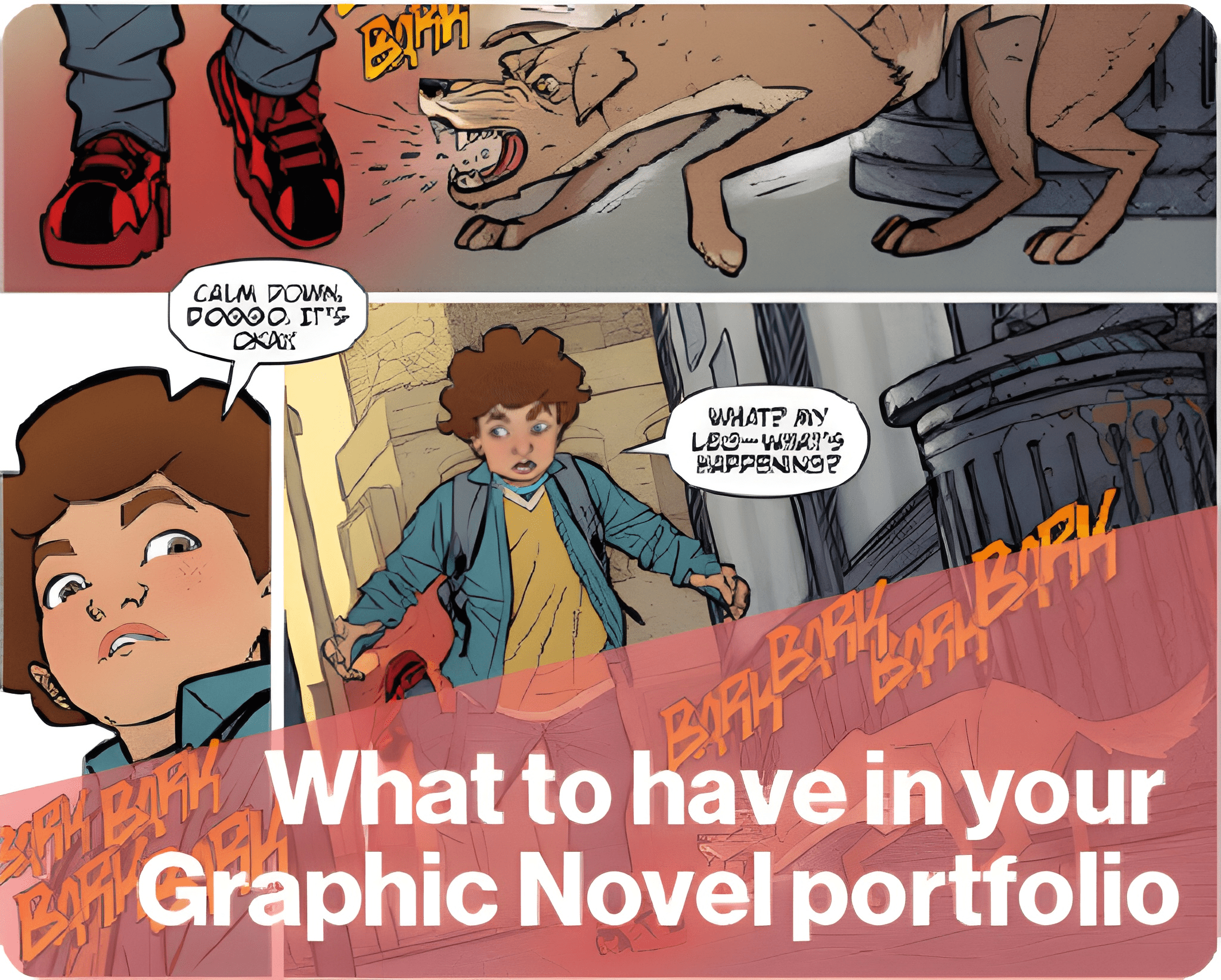
Illustrations by Astound US Inc. illustrators Alessia Trunfio, Alex Lopez, Fran Bueno, Karen De La Vega, Markia Jenai, and Pedro Rodriguez
What to Have In Your Graphic Novel Illustration Portfolio
Teacher: Aurora Barlam, Senior Agent, Astound US Inc
We all know graphic novels are a growing field! Despite that, comics can still be a tough industry to break into. In order to make your portfolio stand out, here are my top tips on what to have in your graphic novel illustration portfolio.
I suggest staying competitive by including both inked black and white art and fully colored art in your portfolio (even though you can work with inkers and colorists on published books). Your skills with both line quality and color palettes will definitely impress editors (pro tip about color palettes: carefully choose how much purple you use, since this color is often overused in comic book art). You can also show character designs in your portfolio, along with fan art of licensed characters if you dream of illustrating your favorite superheroes, TV shows, movies, and toy franchises. The absolute most important thing to include in your portfolio is sequential art.

Sequential art means an illustration that uses multiple panels to tell a story. The term covers everything from newspaper comic strips to elaborate spreads in graphic novel volumes. Graphic novel pages tend to be around 2:3 dimensions and often have 3-9 panels a page (depending on the age range the story is targeted to: less panels for younger audiences, more for older audiences). When designing a composition for a page, consider how to show the action going from one panel to the next. Think of each panel like a frame in a movie. For example, in a story where a kid kicks a ball, you draw the kid and ball in one panel, the foot hitting the ball in the next, and then show where the ball goes. With such a simple prompt, you can probably imagine so many creative ways to visually tell this tale.
When looking at your sequential art, editors will ask themselves:
- Does the action from one panel to the next make sense? For example, if in one panel the ball is on the ground, and then in the next, the ball is in the air, then you need a panel in between where that ball is kicked into the air.
- Is every action explained in the story? If the next page has an adult holding the ball, then where did they pick it up?
- How are you leading the eye through the panels? Draw the reader’s attention to the most important characters and objects within panels, then direct their eyes from one panel to the next in the right order. Also, watch out for tangents that might confuse the reader (for example, straight lines from the top to the bottom of panels can be confused for panel borders).
- Is it dynamic? Try to make a visually interesting composition that your readers will want to explore. Detailed, well-designed backgrounds often separate amateur art from professional art. When everything else is beautifully detailed, you can use more simple panels for visual impact, like a close-up shot in a movie.
Make sure your art answers all these questions! Once you master the basics, there are lots of fun ways to bend the rules, like showing characters fall out of panels or getting rid of the panel borders altogether. After putting this insider knowledge into practice, your portfolio will be sure to impress.
For more free tips for how to improve your illustration portfolio, subscribe to our ITSme Learning Newsletter!
Other News
How to Build an Illustration Portfolio Without Client Work
“I don’t have any client work, what do I even put in my portfolio?” This is one of the more common worries we hear from illustrators who are new to developing their portfolios, but we want to encourage you to reframe this question: Having no client work isn’t a weakness, try to view this as…
Are There Snakes in Your Folio? How to Spot Them Before an Art Buyer Does
What to include in an illustrator portfolio and how to spot snakes! (In the children’s publishing and decorative market) Art directors scan agency portfolios and websites rapidly. They are mentally processing the acquisitions list they’re looking to fulfil, remembering what the rights team said sells well in a particular market, and giving serious artistic consideration…
How to Get Your Illustration Work Seen
Are you an illustrator looking for open calls and opportunities? The work is out there, and you are not invisible, although sometimes in such a competitive environment, we understand it is natural to worry that you are going unseen. The fact is, you just need to know where to look and how to show up…
Why Graphic Novels Are Booming – and Why Now Is the Time to Get Them Into Your Portfolio
Graphic novels are having a moment and it’s no passing trend. From classrooms to bestseller lists, graphic novels are dominating shelves and reading time across all ages. What was once seen as a niche format with a distinct, heavy-lined “comic book” aesthetic has exploded into a dynamic, expressive medium that spans every style and genre…
Can You Spot the AI Art?
AI-generated imagery is becoming harder to spot, but for artists, art directors, and audiences alike, learning to recognise the signs matters more than ever. From strange anatomy and inconsistent lighting to nonsensical details and overly polished textures, AI art often reveals itself the longer you look. It can imitate style, but it struggles to capture…
Make the Right Connections: Be the Name they Remember
How do you connect with clients and agents? It’s a question that comes up again and again, and often you will hear people focus on visibility, being seen at the right events, posting your work constantly and having a strong presence on social media. But connection isn’t just about being visible. It’s about being remembered,…